Nicosia (Lefkoşa)
The name of the capital city of Cyprus dates back approximately 2,250
years to the original settlement of Ledra, which was later renamed
Lefkotheon, but was also sometimes referred to as Ledron.
 During
the Byzantine period
the name changed again to Lefkon, meaning poplar grove. There were a
great many poplar trees lining the banks of the Pedeios river, so the
name was quite apt.
During
the Byzantine period
the name changed again to Lefkon, meaning poplar grove. There were a
great many poplar trees lining the banks of the Pedeios river, so the
name was quite apt.
Since the seventh century A.D., Nicosia has been the capital of Cyprus
(except for a brief period during the Venetian period)
because the Arab raids made so many coastal settlements unsafe. Nicosia
was just far enough inland to escape the worst.
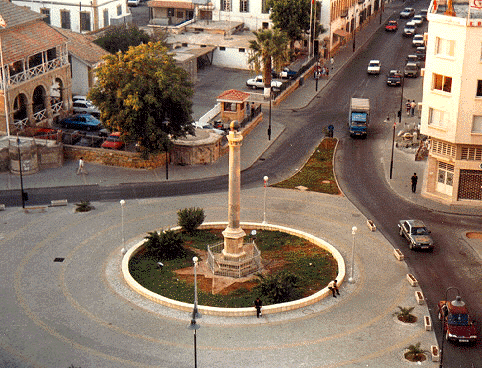
Sarayönü
Square

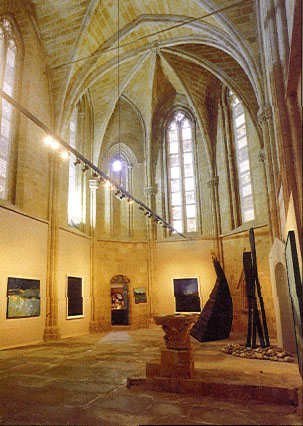
Kyrenia Gate
Haydarpaşa
mosque gallery
Huge, thick ramparts, built
by the Venetians in 1570, encircle the city; the
walls are three and a half miles long and have eleven towers and three
gates.
Within these walls are numerous remains from the middle ages and later
periods.
Outside, there is no trace
of the
mediaeval settlement that once existed as as materials from those
buildings were
used at various points in time to restore and maintain the walls.
 During
the Ottoman
period, the 19th century traveller Archduke Louis Salvator of
Austria noticed that
During
the Ottoman
period, the 19th century traveller Archduke Louis Salvator of
Austria noticed that
"Nicosia is not divided into districts in the usual sense
of the word; the only divisions that could be drawn would be by the
different
populations of the town. The Turks for instance, occupy the parts about
the Gate
of Famagusta, near the mosque of Tahta Kale, and especially those
between the
Gates of Kyrenia and Paphos. The Greeks have chosen principally the
district
between the Episcopal residence and Ayia
Sophia for their dwelling-place, but
are also sprinkled amongst the Turkish population between the Gates of
Kyrenia
and Famagusta. The Armenians are mixed up everywhere with the Turks".
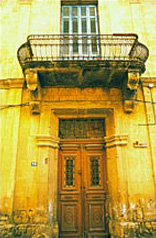
Charming
houses of old Nicosia
The present day capital of the island has a
population of around 150,000 and it is divided into Turkish and Greek
sectors by a boundary known as the `Green Line' which runs in an
east-west
direction.
In the old city of Nicosia, beautiful examples of Gothic and Ottoman
architecture abound - the Selimiye Mosque, the
Bedestan,
the Arab Ahmet Mosque,
and the Great Inn, to name but a few.
The recent years have seen a renewed interest and
efforts for the urban regeneration of the old city of Nicosia. EC and
UNDP's UNOPS have been instrumental in this drive which has seen many
ancient, mediaeval buildings sympathetically restored and renovated.
Some of these include:
Bedestan,
Samanbahçe quarter,
Bandabuliya
(green market),
Selimiye
quarter.
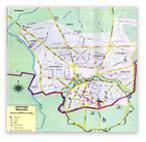 City Map of Nicosia (north)
to plan your visit to the city.
City Map of Nicosia (north)
to plan your visit to the city.
 Border Crossings
between North and South Nicosia
Border Crossings
between North and South Nicosia
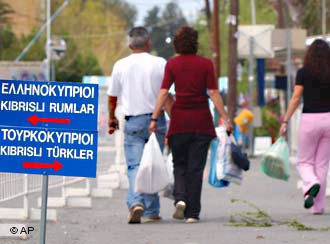 At
present there are two main border crossings between the two sectors of
Nicosia.
At
present there are two main border crossings between the two sectors of
Nicosia.
Ledra Palace checkpoint (for pedestrians) which is
in the city centre and Metehan (Ayios Dhometios) checkpoint which is
for crossings by motor vehicles.
It is necessary to have your passport/ID card
presented to the authorities at the border checkpoints. If you are an
EU passport holder or have visa to enter the 'Republic of Cyprus' you
should present your papers to the Turkish-Cypriot authorities at the
border, fill in a white visa slip with your name, passport number and
nationality and then you will be allowed to pass.

 Nicosia